


Fire alarm systems
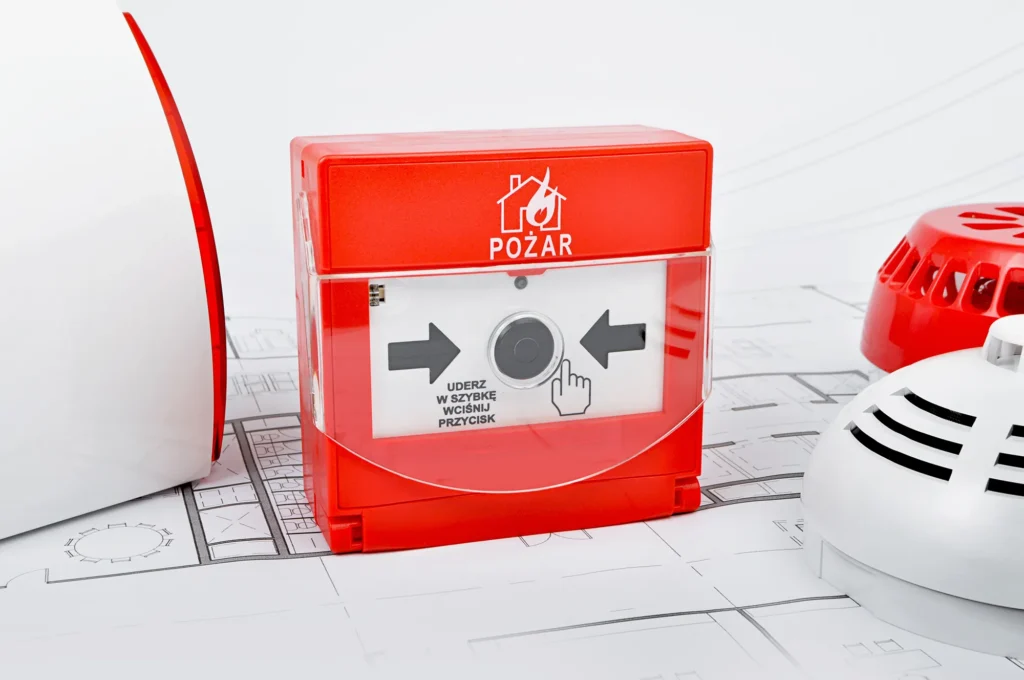
Fire alarm systems – an essential part of fire protection
Fire alarm systems detect signs of fire, alert people to danger and support evacuation from affected buildings. When integrated with other fire protection equipment, they can trigger a coordinated response to help limit the spread of fire and reduce harm to people and property.
A fire alarm system consists of a control panel, fire detectors and functional modules installed throughout the building. It monitors conditions around the clock and is an important part of fire protection in industrial premises, public buildings and private properties.
Main functions of fire alarm systems
Fire alarm systems perform several key tasks to detect danger promptly and help limit the consequences of a fire. These include:
- Early fire detection – Detectors identify signs of fire by responding to smoke, heat or flames.
- Warnings and notifications – Once a fire is detected, the system raises an alarm to warn occupants and, where connected, notify emergency services.
- Control of fire protection equipment – A system can close fire dampers, open smoke vents and activate fire suppression equipment where these functions are integrated.
- Support for safe evacuation – Depending on its configuration, the system can release emergency exit doors, stop ventilation or disconnect selected electrical equipment to support evacuation.
- Monitoring and status information – The system reports detected events and the status of connected protection equipment, helping operators respond effectively.
Where are fire alarm systems used?
Fire alarm systems are used in many types of building, particularly where large numbers of people are present or valuable property needs protection. Common applications include:
- Hospitals – Where some patients cannot evacuate quickly without assistance.
- High-rise buildings – Where evacuation is more complex and requires coordinated safety measures.
- Industrial premises – Where hazardous materials or industrial processes can increase fire risk.
- Banks and financial institutions – Where valuable assets and documents need protection.
Fire protection requirements may call for alarm systems in public buildings, warehouses and other large premises. Insurers may also require them as part of the property's protection measures. The requirements for each building depend on its use and applicable regulations.
Integrating fire alarms with other protection systems
A fire alarm system can connect to other fire protection systems to coordinate the response to a detected fire. Depending on the installation, this can include:
- Activating fire suppression – The alarm system can trigger compatible fire suppression equipment in the affected area where this function is part of the design.
- Controlling fire dampers and smoke vents – Fire dampers can close to restrict the spread of smoke and flames, while smoke vents can open to support evacuation.
- Isolating hazardous equipment – Selected electrical and gas equipment can be shut down to help reduce the risk of an explosion or further spread of fire.
How a fire alarm system responds
After a hazard is detected, A fire alarm system follows configured procedures, which may include the following steps:
- Detection – The control panel receives a signal from a smoke, heat or other fire detector.
- Raising the alarm – The control panel activates audible and visual alarms to warn people in the building.
- Notifying response services – Notifications are sent to the fire service or a security company where the relevant connection is in place.
- Activating fire protection – The control panel can trigger connected suppression equipment or close fire dampers to help contain the fire.
- Supporting evacuation – The system can release emergency exit doors and run other configured procedures, such as shutting down hazardous equipment.
Why are fire alarm systems important?
Installing a fire alarm system is an important safety measure in properties exposed to fire risk and may be required by applicable regulations. Early detection enables a faster response, helping reduce the risk of serious harm and property damage. This is especially important in buildings occupied by large numbers of people.